Thermal services
Infrared roof moisture surveys
Find wet insulation under flat and low-slope roofs so you repair the wet section, not the whole roof.
Explore →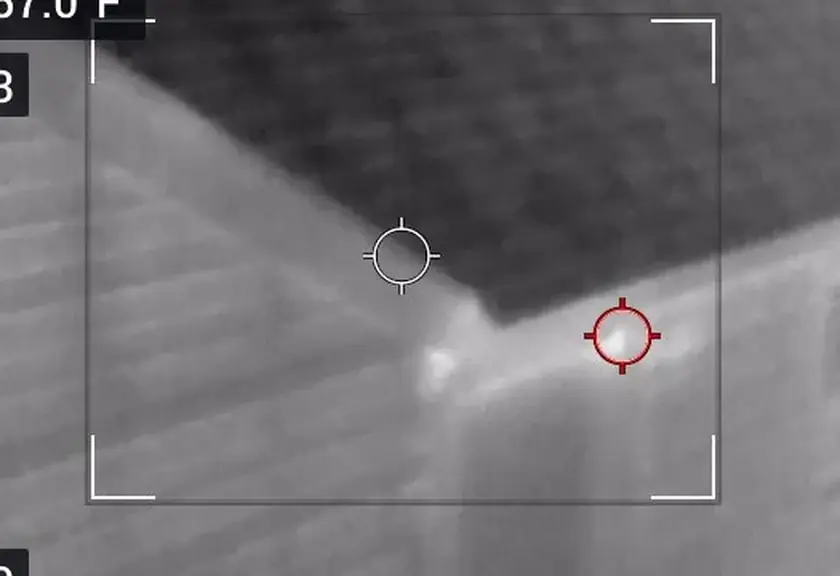
Moisture scan for ice dams & drafts
A thermal scan of the roof, eaves and inside that shows where heat escapes and where moisture is likely.
Explore →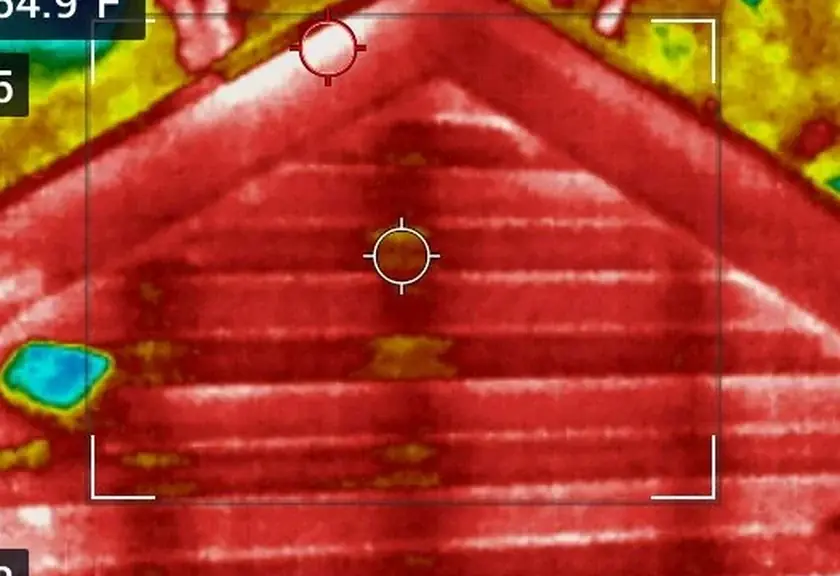
Building envelope survey
A complete infrared survey of walls, windows, doors, ceilings and floors, documented for insurance, warranty and public work.
Explore →What a thermal camera actually sees
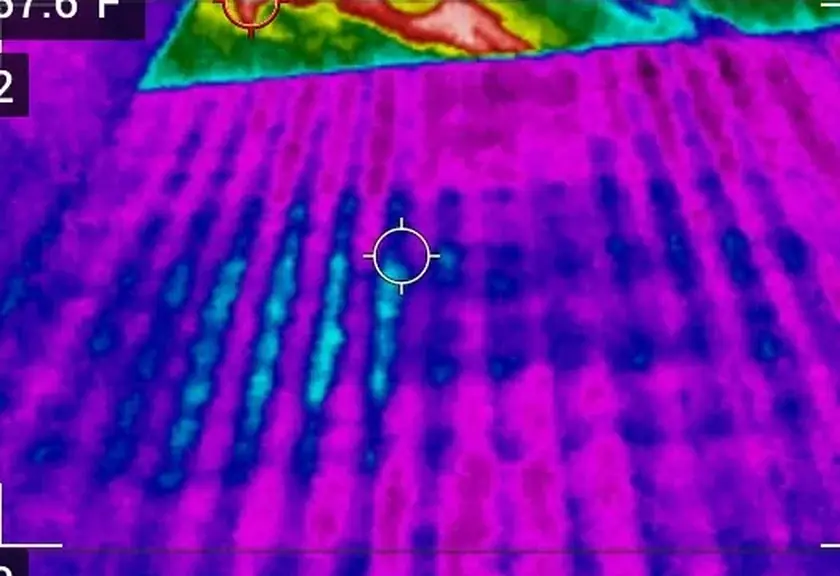
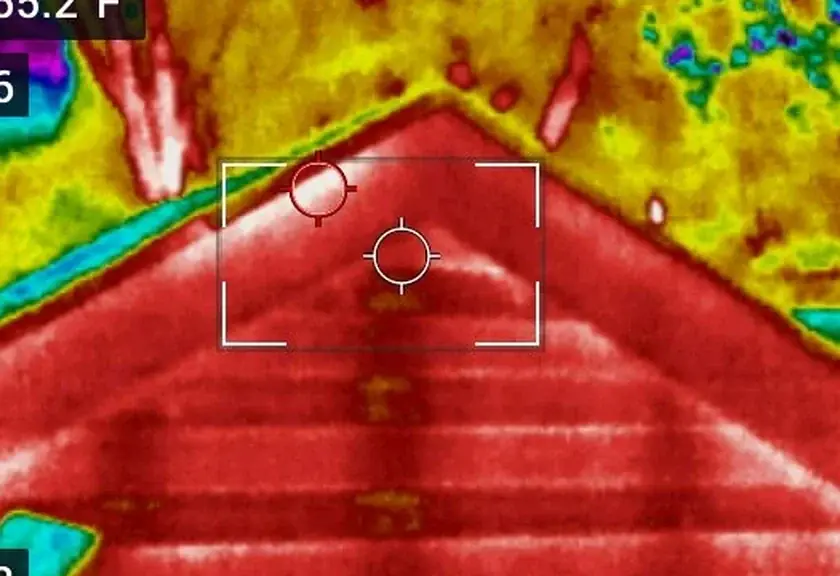
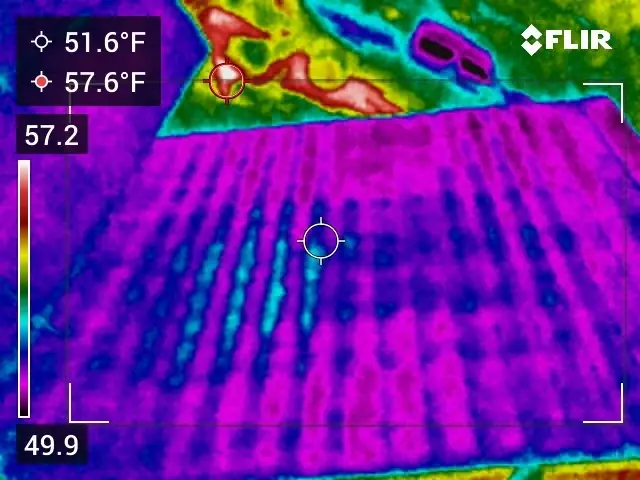
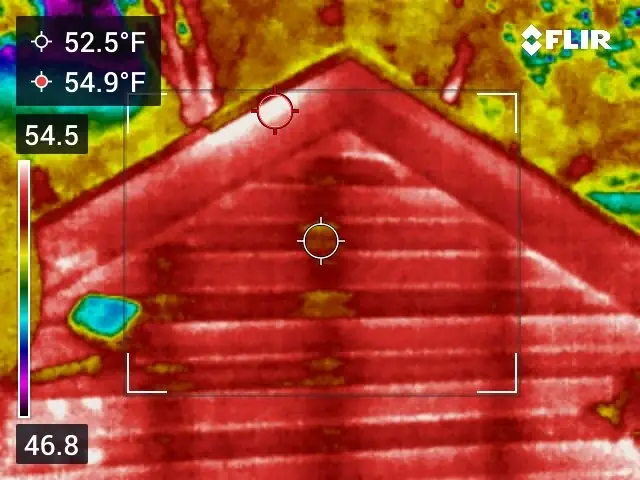
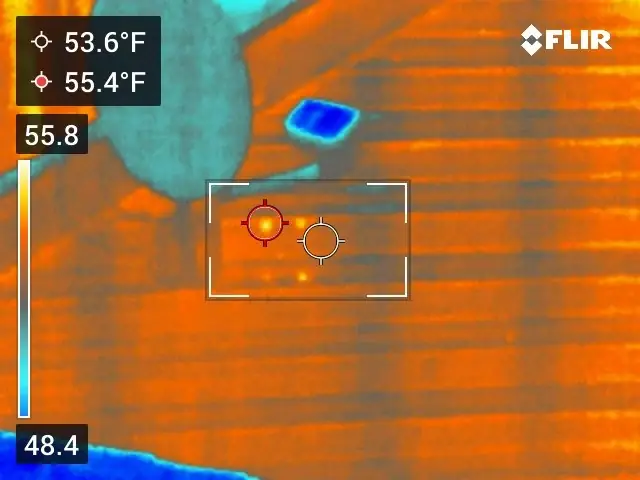
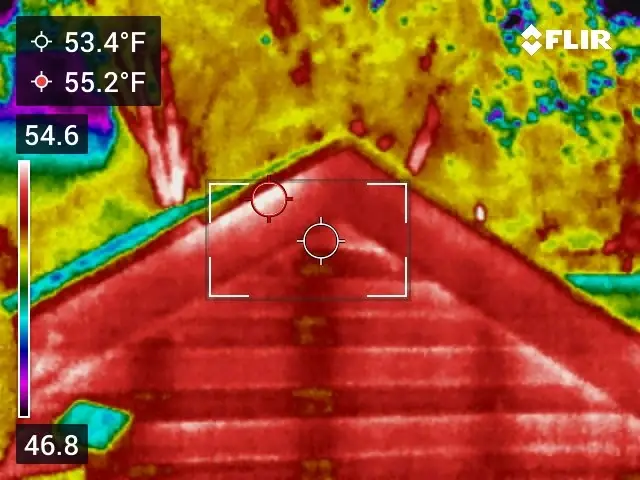
A thermal imager measures surface temperature. It can't see through a roof or a wall. What it can see is that wet materials, missing insulation and air leaks change how a surface heats up and cools down, and that pattern is what we record.
That's why timing matters. Roof moisture surveys are done after dark following a sunny day, when wet insulation releases its stored heat more slowly than dry insulation. Building surveys are done in cold weather with the heat running, when missing insulation and air leaks show clearly. And it's why every suspect area is confirmed by independent means, core samples on roofs and a moisture meter on walls and ceilings, before it goes in a report.
What it looks like
How we work
Scheduled for the right conditions
A dry surface, a sunny day beforehand and light wind for roofs; a large inside-outside temperature difference for buildings. If conditions aren't right, we reschedule at no charge.
Every suspect area documented
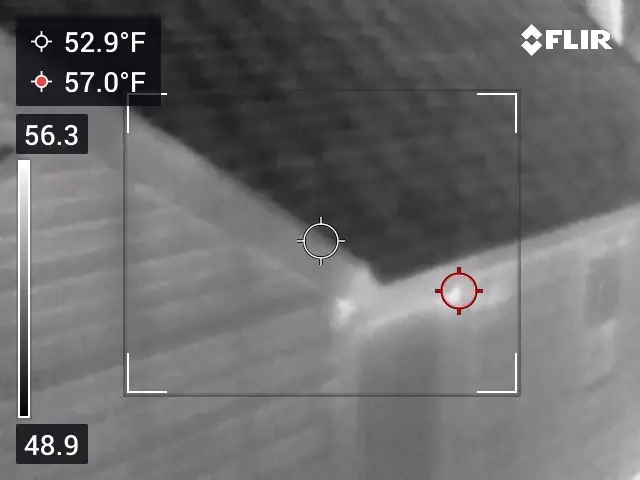
Each area is captured as a paired thermal and visual image, numbered and marked so it can be found again.
Confirmed by independent means
Core samples taken by your roofer on roofs; moisture-meter readings on walls and ceilings. Level I thermography is qualitative, so we confirm before we report.
Report, walk-through and re-scan
A written report with every finding marked on a roof plan or elevation, a free 15-minute call to walk through it, and a re-scan after the repair to confirm it worked.
Credentials and equipment
Thermal work is led and reported by Doug Lancie, an Infraspection Institute Level I Certified Thermographer (sUAS), Cert. No. 20483-D, and FAA Part 107 remote pilot. Infraspection Institute has published standards for infrared inspection since 1988, and portions have been incorporated into ASTM documents.
Handheld surveys use a FLIR C8 radiometric imager with traceable factory calibration. Aerial thermal screening of large roofs is flown under Part 107 night-operation rules with anti-collision lighting. Level I thermography locates and documents thermal patterns; repair methods and costs come from your roofer, contractor or engineer.
Pricing
Every building is different, so thermal work is quoted per job after a quick call about the building, the roof and what you need the results for. Call or text (585) 645-2969 or request a quote; most quotes go out the same day.
Common questions
What does a thermal imaging inspection cost in Rochester?
Is the thermographer certified?
Can a thermal camera see through walls or roofs?
Is this a home inspection or an energy audit?
When is the best time of year?
Related services
Infrared roof moisture surveys
Find wet insulation under flat and low-slope roofs so you repair the wet section, not the whole roof.
Explore →Moisture scan for ice dams & drafts
A thermal scan of the roof, eaves and inside that shows where heat escapes and where moisture is likely.
Explore →Building envelope survey
A complete infrared survey of walls, windows, doors, ceilings and floors, documented for insurance, warranty and public work.
Explore →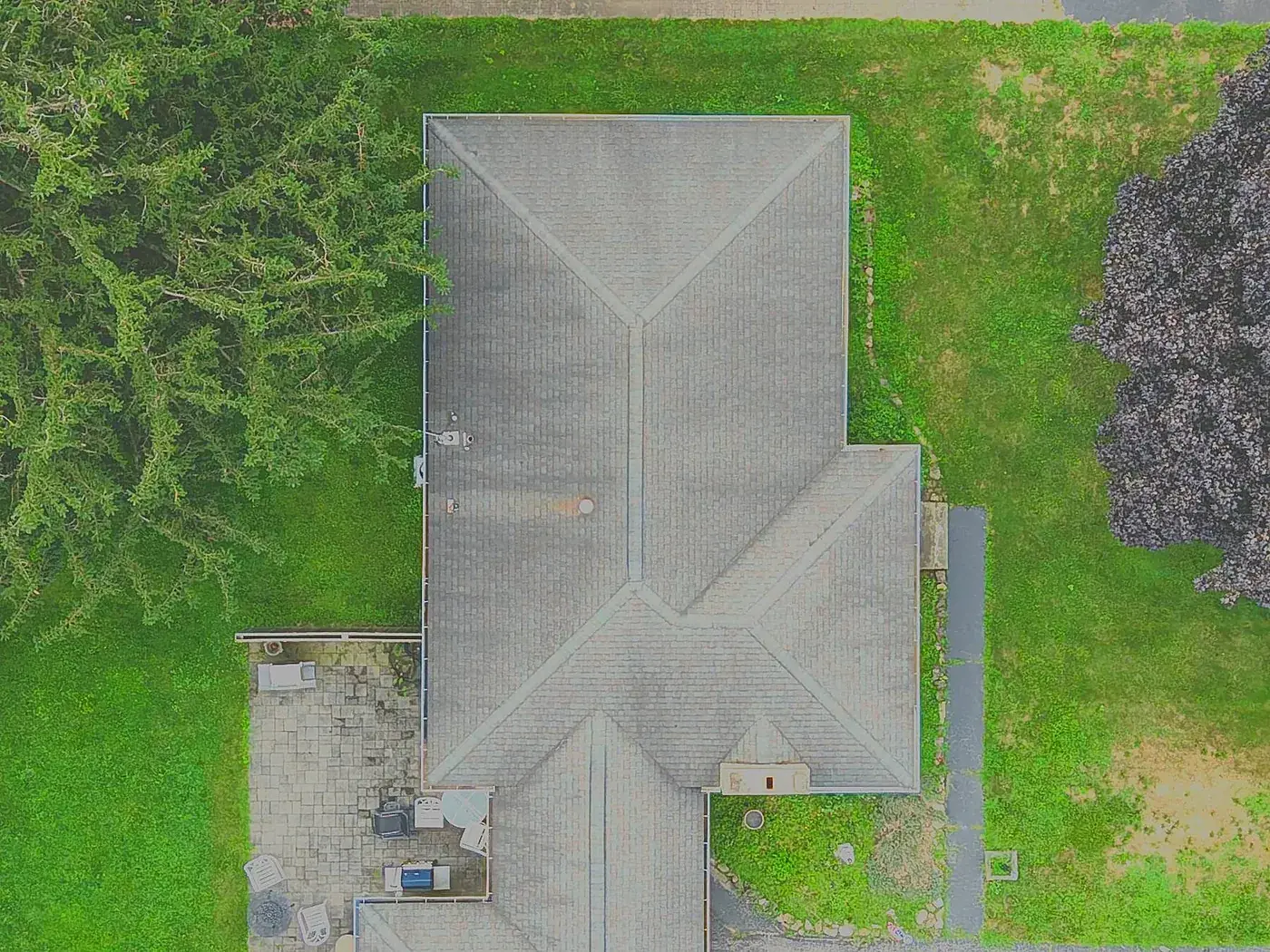
Drone roof inspection reports
Every slope and ridge photographed from above and annotated in a PDF. No ladder. $95.
Explore →Where we fly
Based in Irondequoit and serving Rochester and Monroe, Wayne, Ontario, Livingston, Orleans and Genesee Counties, including Irondequoit, Webster, Penfield, Fairport, Pittsford, Brighton, Henrietta, Greece, Gates, Chili, Hilton, Spencerport, Victor, Canandaigua, Brockport, Honeoye Falls, Sodus, Williamson, Geneseo, Batavia and Albion. Travel beyond 25 miles of Rochester is $0.75 per mile. FAA airspace authorization near Greater Rochester International is filed by us at no charge.